
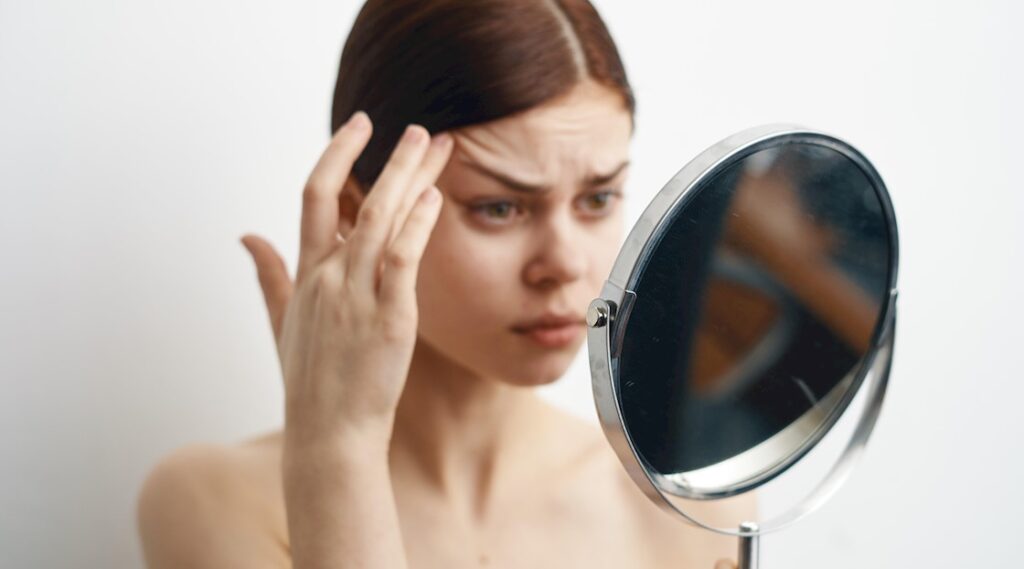
The pursuit of beauty has taken on a whole new meaning in our present times. Gone are the days when it was only about luxurious facials and expensive creams and the days where a strict beauty regimen coupled with a consultation with one’s aesthetic practitioner every few months leaving one’s skin firmer, tighter and clearer would be more than enough.
There has been a disconcerting movement globally where many want to look like their favourite celebrity or someone they’ve seen on social media (most probably with a filter applied).
Global statistics show the exponential growth of cosmetic and plastic surgery procedures.
In the UK alone Before the pandemic – BAAPS says 31,057 procedures took place in 2022, which is a 102% rise from 2021 when there were 15,405 done.
In 2019 – before the pandemic hit – BAAPS reported a total number of 28,347 surgeries taking place with top procedures being rhinoplasty, breast augmentation, breast reduction, blepharoplasty (eyelid surgery), and abdominoplasty.
In the USA according to ASPS (American Society of Plastic Surgeons) in 2020 almost 4 million cosmetic surgery procedures were registered. Procedures focusing on the body, including liposuction, tummy tuck (abdominoplasty) and arm and lower body lifts led the way, accounting for a 25% uptick and 576,485 procedures total in 2022. Surgical procedures for the face grew an average of 18% over the course of the pandemic – totaling 346,384 and includes procedures such as eyelid surgery (blepharoplasty), facelifts and nose reshaping (rhinoplasty).
The entire world comments on how a celebrity looks – all their physical appearances are up for constant scrutiny. And we can also easily see how far some have gone with cosmetic treatments but when someone is in the grips of ‘perception drift’ it is difficult as one loses sight of how they looked in the first place.
In 2019, Dr Sabrina Fabi a cosmetic surgeon coined the term ‘perception drift’ which refers to an individual’s changing perception of how their physical appearance is seen over time after a series of treatments and procedures.
Scene-
You have always wanted fuller lips and you initially have dermal filler, which gives you the desired result. But soon this may not be enough because you think they can even more plump, or now your attention has gone to other parts of your face (nose, jawline, cheeks) which you want to change since you’ve had your lips done. This phenomenon of perception drift now triggers dissatisfaction and you start to have ongoing non-surgical and maybe even surgical procedures due to the constant scrutiny you have placed on yourself, or comparing yourself to your beauty ideal, either real or an image in your head. This is often further fueled by media and celebrity culture and the pressures to look a certain way.
Outcome?
This individual could now become virtually unrecognisable, after a certain stage, and there may well be no connection to the original anymore. The drift is complete. This can have serious implications on one’s psychological health.
The main factors that influence this condition
Culture- Many cultures have dictated throughout time how a woman or a man ought to look, and this is a global issue across both Eastern or Western cultures.
Social media- We live in an era bombarded with images and beauty ideals. Our selfie-obsessed culture has a huge impact on many people’s self esteem. Everyone at some point would have faced the brunt of insecurity related to any one thing of their choice. Filters that create smooth flawless facial features are rampant and penetrate deep into the psyche of anyone who is fragile or harbour insecurity for how they look. BDD, depression and various eating disorders are all symptoms of this, even though of course they pre-existed social media.
Differences in Preferences- A study conducted by Peskin and Newell (2004) showed familiarity breeds attraction. This basically highlights the fact that the more exposure one has to certain faces, ie. seeing a similar/certain type of celebrity over and over the media and in Ads etc the more attractive and desirable it becomes no matter how distorted that celebrity may look.
Symptoms of body dysmorphic disorder (BDD)
Patient with BDD typically show some or all of the following symptoms and signs:
- worrying a lot about a specific areas of their body/face
- spending a lot of time comparing their looks with other people’s
- looking at themselves in mirrors a lot or avoiding mirrors altogether
- going to a lot of effort to conceal flaws – for example, by spending a long time combing hair, applying make-up or choosing clothes in obsessive self deprecating manner.
- picking at skin to make it “smooth”
BDD can seriously affect daily life, including your work, social life and relationships. BDD can also lead to depression, self-harm and suicidal behaviour.
We asked our Surgeon and Clinic Director Dr Brian Simons a few questions around this.
How does a surgeon like you address BDD in Patients? How are you geared up to understand this mental health condition?
Dr Brian-
It is a radar that one develops after years of experience and also there is a screening questionnaire, and psychologists/psychiatrists work with this to diagnose the disorder.
There are some general “symptoms” such as never happy with their looks, checking in mirror continuously, comparing with others, constantly seeking reassurance from others etc
Some simple questions can give a direction for us surgeons to determine or at least raise a red flag about the perceptions/expectations of our patients.
We have to have a very good understanding of each individual we are treating so we know the most appropriate approach. We are trained to analyse the words and behaviour of people, which is very important. We do it almost every hour of the day in every encounter.
I evaluate how to treat patients especially when they have developed BDD after abuse. I aim to take an honest appraisal as to how treatment can improve their lives instead of simply a cosmetic reason.
How to avoid perception drift after cosmetic procedures?
Using photos as a baseline before the cosmetic procedure and after. This way the patient is in touch with their reality and how they originally looked, helping them to validate the improvements made and also avoid any ‘perceived’ imperfections.
Visual training techniques are a great way for the patient to accept themselves physically. When viewing themselves in front of a full length mirror they can see their entire face and body in a non-judgemental, and much more appreciative, way.
Support with realistic expectations is the foundation for any patient prior to a cosmetic procedure. Any qualified surgeon is able to understand their patient’s concerns, lifestyle and their physical make up. Also as a provider of cosmetic treatments it’s a very responsible role and we must know when to say no, and also advice on the right kind of treatments as too many cosmetic doctors have been caught in the web of greed by preying on a patient’s insecurities.
It is advised to talk to your medical provider/GP about BDD. If you or a member of your family or friend are suffering from this and haven’t done so, now is the time. There is much social stigma surrounding this condition, but it can be treated.
Here at The Ministry of Aesthetics, it is our mission to help you discover your best self. Learn more about our non-surgical and surgical treatments and technologies that will give you natural-looking results by scheduling an appointment with us. Book your consultation today or Email: info@ministryofaesthetics.co.uk


