
Introduction
Whilst summer is a time for us all to enjoy the sun and shed the winter layers, it also comes with its own set of issues. Sweating, which is actually a great thing as it cools us down, can be one of the said issues, when it becomes excessive.
Hyperhidrosis (excessive sweating) is a disorder where the sufferer experiences excessive sweating independent of environmental and thermoregulatory conditions. In Hyperhidrosis, excessive perspiration is produced even when temperatures are cool, and usually occurs in the armpits, hands, scalp and feet without any apparent trigger. Hyperhidrosis can cause clothing to become soaked with perspiration, and it can also cause physical discomfort, anxiety and stress.
Affecting around 5% of the global population, it often has a social stigma attached to it, due to lack of understanding of this medical condition. Hence it can lead to embarrassment and the sufferer may avoid physical activities such as playing sports if the excessive sweating is in the palms/hands, and it also becomes challenging to be a part of social/physical interactions because some people can be put off by a clammy handshake or standing in close proximity to someone who’s dripping with sweat.
Surgery can effectively eliminate Hyperhidrosis, but there may be some unavoidable side effects. We believe that non-surgical methods to control hyperhidrosis should be tried before considering surgery depending on the type of Hyperhidrosis you are afflicted with:
Primary focal hyperhidrosis
The excessive sweating is not caused by any underlying condition or medication.
Secondary generalised hyperhidrosis
The excessive sweating is caused by an underlying medical condition or is a side effect of a medication.
Areas of the body affected by hyperhidrosis
Palmar hyperhidrosis = sweaty hands
Plantar hyperhidrosis = sweaty feet
Axillary hyperhidrosis = sweaty underarms
Craniofacial hyperhidrosis = sweaty head and/or face
Let’s look at some non surgical treatments first:Antiperspirants for underarms, hand, feet, face and more

Antiperspirants can help by temporarily plugging up sweat ducts, which reduces sweating, according to the International Hyperhidrosis Society (IHS).
Often doctors will tell their patients to apply antiperspirants to their underarms even at night to block any sweating that might occur (even though excessive nighttime sweating is uncommon).
Botox
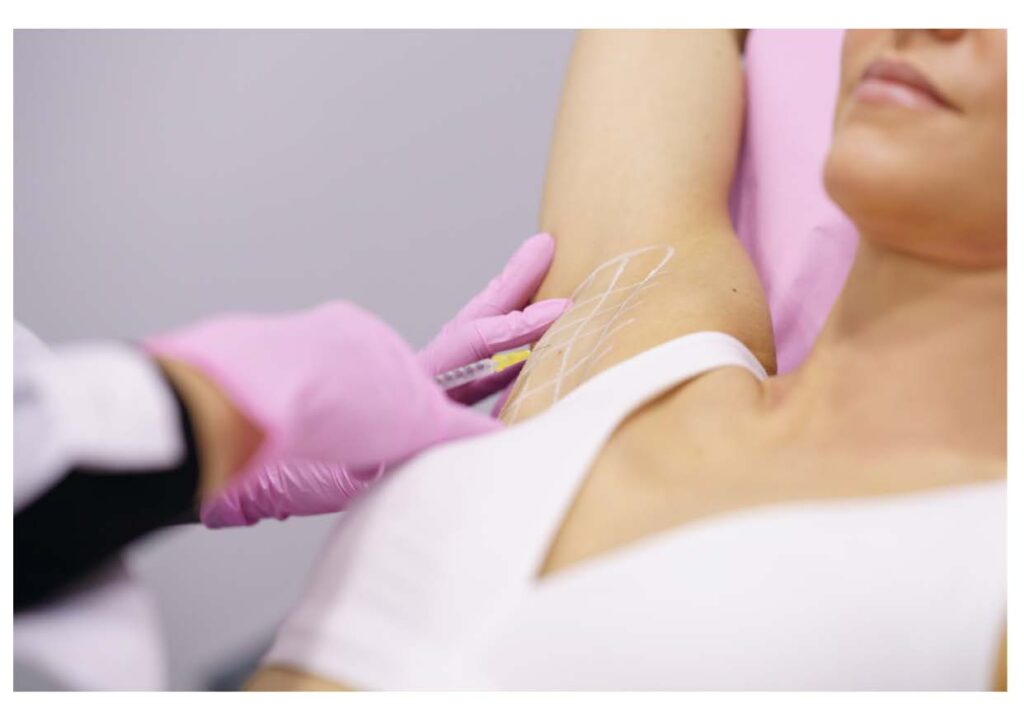
Botox (onabotulinumtoxinA) is FDA-approved to treat severe primary axillary hyperhidrosis when topical treatments are not effective. OnabotulinumtoxinA can temporarily block the release of the chemical that initiates the body’s sweat glands.
The IHS states, “By blocking, or interrupting, this chemical messenger, botulinum toxin ‘turns off’ sweating at the area where it has been injected. Botox injections are very shallow, meaning that the medicine is injected just below the surface of the skin, where it remains.”Using Botox in the hands can be difficult because the skin on the palms is thick, making it hard for solution to penetrate. Due to many nerve endings in the fingers and hands, botox injections might be quite uncomfortable. Most patients need Botox injections every 4 to 6 months. Patients describe the results as genuinely liberating and life-changing, allowing them newfound confidence for their daily lives. Numerous studies have demonstrated its efficacy in reducing anxiety. For example, according to a study published in the journal Scientific Reports in 2021, people who received Botox injections at four different sites reported anxiety significantly less frequently than those who received different treatments for the same conditions. The risk of anxiety was found to be reduced by 22-72% in Botox patients.
This is our preferred non-surgical treatment here at Ministry of Aesthetics- Contact us
It’s important to note that sweating is a natural bodily function and an essential detoxification process, so treatments such as Botox should really be reserved for treating excessive sweating.
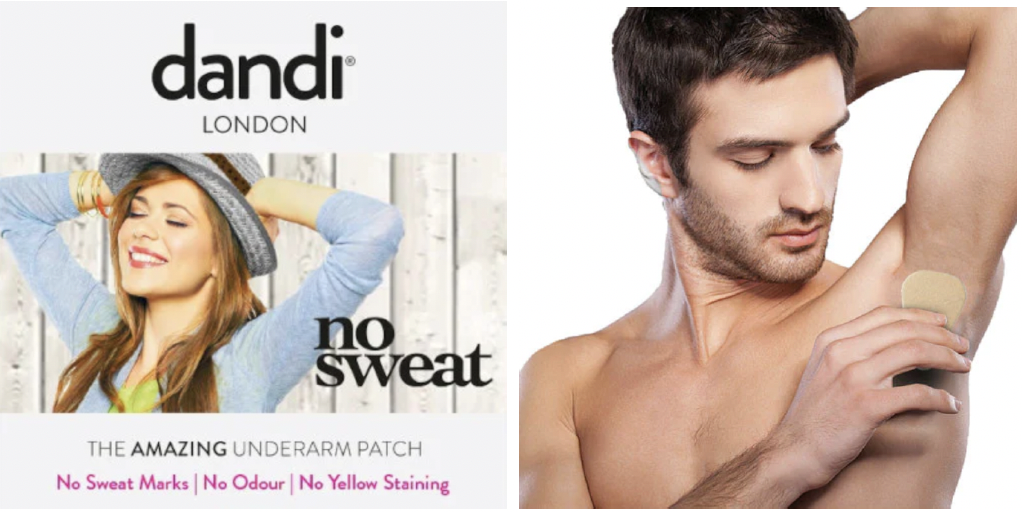
If you are looking to simply reduce regular sweating you can consider sweat patches to use at home such as dandi sweat patches. These could be an alternative to antiperspirants.
Microwave Technology (miraDry®)
For the treatment of axillary hyperhidrosis only (underarms), it’s a handheld medical device, used in clinic, to direct microwave energy to the skin where sweat glands are located. The heat it generates, via microwave technology, eliminates or damages sweat glands in the underarm, says the IHS.
*This is not a treatment we currently offer at Ministry of Aesthetics
Oral medications

Prescription medications can also help stop the sweat glands from producing sweat.
Anticholinergics, a class of medicines including glycopyrrolate, oxybutynin, benztropine, propantheline, are the most common oral medications used for hyperhidrosis. However, these drugs have not been studied in controlled clinical trials specifically for hyperhidrosis. They are, however, FDA-approved in the USA.
For example, the most common medication given orally would be oxybutynin, which stops sweating as a side effect, but is FDA-approved to treat bladder problems, and it also dries out your mouth and eyes.
Additionally, dermatologists are pioneering the treatment of other excessively sweaty localised (or relatively small) body areas such as areas in the groin, under the breasts, and on the back or chest.
It is advised to talk to your medical provider/GP about excessive sweating. If you or a member of your family or friend haven’t done so, now is the time. There is much social stigma surrounding this condition, but it can be treated.
If you’re considering an oral medication to treat excessive sweating, please know that experts in the field recommend that you try antiperspirants, iontophoresis, or Botox injections, too (or a combination of these).
Book a consultation with us now if you want to discuss your options.
Further reading:


